Click Happy: Inside the Obsessive, Satisfying World of DIY Mechanical Keyboards
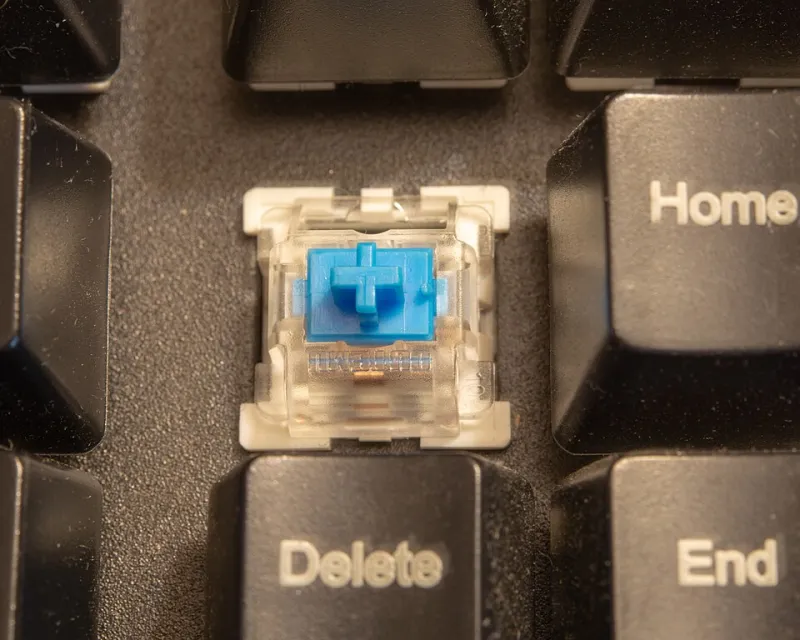
Photo: Fletcher, CC BY 4.0, via Wikimedia Commons
Somewhere in suburban Ohio, a guy named Marcus spent three weekends bent over a soldering iron, carefully installing 87 individual switches into a keyboard tray the size of a hardcover novel. He wasn't fixing something broken. He wasn't on a deadline. He was, by his own cheerful admission, "just really into the sound."
Welcome to the DIY mechanical keyboard scene — a corner of the maker world where the obsession is completely audible, the community is fiercely passionate, and the end product is something you'll use approximately eight hours a day and feel weirdly proud of every single time you press the letter G.
Why Would Anyone Build a Keyboard?
Fair question. Keyboards are, on the surface, about as glamorous as a stapler. You press the keys, words appear, you go on with your life. But spend five minutes on a subreddit like r/MechanicalKeyboards — which boasts millions of members — and you'll quickly realize that for a very enthusiastic slice of the American population, keyboards are anything but mundane.
The appeal breaks down like this: every element of a mechanical keyboard, from the switches under the keys to the foam dampening inside the case, affects how it feels and sounds when you type. A membrane keyboard (the flat, squishy kind that ships with most desktop computers) gives you almost no feedback at all. A mechanical keyboard, on the other hand, gives you options. Tactile bumps. Audible clicks. Smooth linear strokes. Heavy resistance or feather-light actuation. And when you build one yourself, every single one of those variables is yours to control.
"It's the closest thing to tailoring your own suit," says Jordan, a software developer in Austin who has built eleven keyboards over the past four years. "Except when you're done, you actually use it constantly. My suits just hang there."
The Parts, the Process, and the Beautiful Chaos
Building a keyboard from scratch is a multi-step project that involves more vocabulary than most people expect. There's the PCB (the circuit board that registers your keystrokes), the case (aluminum, acrylic, polycarbonate — each with a different acoustic fingerprint), the plate (which holds the switches in place), the stabilizers (little wire-and-plastic rigs that keep bigger keys like the spacebar from wobbling), and of course the switches themselves.
Switches alone could fill a catalog. Gateron, Cherry, Kailh, Boba, Topre — each brand makes dozens of variants, and enthusiasts will argue endlessly about which one produces the most satisfying thock (a deep, resonant keystroke sound that the community treats roughly like audiophiles treat vinyl warmth). Before the switches even get installed, many builders lube them — applying a thin coat of specialty grease to each one by hand, a process that for a full-size keyboard can take several hours and requires the patience of someone who genuinely enjoys the act of doing small, careful things repeatedly.
Then there's soldering. Not every build requires it — hot-swap PCBs let you pop switches in and out without heat — but many enthusiasts prefer a soldered board for its stability and connection quality. If you've never held a soldering iron before, your first keyboard might teach you a few things: how to tin a tip, how to avoid cold joints, and how to unsolder a mistake at 11 PM while questioning your life choices.
"My first build took me two full days and I desoldered the whole thing twice," laughs Priya, a graphic designer in Chicago who now builds keyboards as gifts for friends. "But when it finally worked and I typed my name on it for the first time, I genuinely teared up a little. Which I realize sounds insane."
It doesn't sound insane. It sounds like someone who made something with their hands.
Keycaps: Where Things Get Expensive
If the switches are the engine of a custom keyboard, the keycaps are the paint job — and this is where the hobby can take a sharp turn toward the financially adventurous. Keycap sets are often sold in group buys, a pre-order model where a designer pitches a colorway or theme, enough people pledge to fund production, and then everyone waits — sometimes six months to a year — for their caps to arrive.
Limited-edition sets can fetch hundreds of dollars on the secondhand market. Rare vintage keycaps pulled from old IBM or DEC terminals are treated like artifacts. There are keycap sets inspired by retro operating systems, Japanese city pop aesthetics, deep-sea creatures, and — naturally — cats.
Marcus, our Ohio soldering enthusiast from earlier, admits his keycap collection now lives in three separate storage bins. "My wife thinks it's a reasonable hobby," he says, then pauses. "She has not seen the bins."
More Than a Peripheral — It's a Practice
What keeps people in this hobby isn't just the gear, though. It's the shift in relationship between the builder and their tools. When you've spent a weekend constructing the thing your fingers touch more than any other object in your life, you notice it differently. You type differently. Slower at first, more deliberately — not because the keyboard demands it, but because you're suddenly aware of every keystroke in a way you never were before.
Several builders describe a version of the same phenomenon: after finishing a build, their typing posture improved, their WPM crept up, and they started caring about their desk setup in ways that spilled into other areas of their workspace and workflow.
"It sounds corny, but building the keyboard made me more intentional about how I work," says Jordan. "Like, I put this much care into the tool — I should probably put that much care into what I'm making with it."
That's the quiet secret underneath all the switch-lubing and stabilizer-modding: this hobby is really about slowing down and paying attention. In an era where most of our digital tools are locked, proprietary, and designed to be replaced rather than repaired, building a keyboard is a small, satisfying act of reclamation. This one's mine. I made it. I know every piece of it.
Where to Start Without Losing Your Mind
If this sounds appealing and you're ready to dip a toe in without committing to a full soldering setup, the good news is there's a gentle on-ramp. Hot-swap keyboards — where switches simply press in and out without soldering — are widely available and genuinely beginner-friendly. Brands like Keychron offer solid entry-level options that you can modify over time as your preferences develop.
From there, the community will take care of you. YouTube channels dedicated to keyboard builds have millions of views. Discord servers will help you troubleshoot a rattly spacebar at midnight. And once you've typed on something you built yourself, you'll understand why Marcus is on keyboard number seven and already sketching out number eight.
The clack is calling. You might as well answer it.